
Home → Journal → Children's healthcare
Children's healthcare
How Children’s Healthcare Works in Cyprus: What Parents Need to Know
Paediatricians, weekend care, A&E, pharmacies and GESY, explained for families who have just moved to Cyprus

If you have recently moved to Cyprus, your introduction to the local healthcare system often follows a fairly predictable script. First, your child gets ill. Then you start trying to work out who to call, whether a doctor can come to the house and what exactly you are supposed to do if all of this happens on a Sunday evening.
For many families arriving from countries where children are attached to a local clinic or district paediatrician, this is the moment Cyprus starts to feel very different. There is no equivalent network of neighbourhood children’s polyclinics, paediatricians do not routinely make home visits, and the route to medical care works differently. It can feel confusing at first, but the system itself is not particularly complicated once you know the route. Ideally, before somebody develops a temperature of 39°C.
It starts with a paediatrician
When a child is ill, the paediatrician is usually the first doctor parents contact. Fever, cough, sore throat, rash, earache, stomach pain and most of the other things children arrange for inconvenient moments normally begin here. The paediatrician examines the child, recommends treatment and, when necessary, refers them for tests or to another specialist.
This is why finding a paediatrician you trust is worth doing soon after you move, rather than waiting until the first illness. Choosing a doctor while everyone is healthy is a fairly ordinary administrative task. Choosing one while holding a miserable child and searching “paediatrician open now” on your phone is a different experience.
There is no local children’s clinic assigned to your address
This is one of the first differences many newly arrived families notice. A child is not automatically attached to a neighbourhood clinic and district doctor. Parents choose the paediatrician they want to use.
The doctor may work from a medical centre, an independent practice or a private clinic, and every practice has its own timetable and way of organising appointments. So recommendations and medical experience matter, but practical questions matter too. How far is the practice from home? How quickly can you normally get an appointment? Does the doctor see urgent cases? Do they work on Saturdays? Is it easy to reach the doctor or reception?
Those details sound rather mundane when the child is perfectly well. They become dramatically more interesting at 7:15 on a Saturday morning when the child is not.
Can a paediatrician come to your home?
This is one of the most common questions from parents who have recently moved to Cyprus. In many countries, calling a paediatrician to the house when a child is ill feels completely normal. In Cyprus, it is much more the exception than the rule.
Some doctors do offer home visits, but this is usually a separate service and needs to be arranged individually. In a normal situation, parents contact their paediatrician, make an appointment and take the child to the practice. So do not be surprised if even a child with a high temperature is asked to come in. A proper examination is often much easier in the clinic, where the doctor has the equipment they need.
What if the child gets ill in the evening or at the weekend?
This is worth understanding before you need it. If the problem happens on a weekend or public holiday and does not require emergency treatment, families can use the on duty doctor service. These consultations take place at designated hospitals and medical centres, and it is usually sensible to call first to confirm the hours and how the service is operating that day.
For example, the checked source information for this guide lists Hippocrateon Private Hospital in Nicosia, Mediterranean Hospital in Limassol, Evangelismos Private Hospital in Paphos and Larnaca General Hospital for children in Larnaca.
If a child becomes ill during the night or their condition causes serious concern, parents can go directly to a 24 hour Accident & Emergency department without a referral. If there is an immediate threat to life, call 112.
Fortunately, most childhood illnesses do not require emergency treatment. The useful preparation is much less dramatic: know who your regular paediatrician is and know where you would go if you needed help on a Sunday. Then you can forget both pieces of information until a child chooses the least convenient possible moment to remind you.
What if you need another specialist?
Paediatricians deal with most common childhood illnesses, but sometimes a child needs an ENT specialist, orthopaedic doctor, dermatologist, ophthalmologist or another specialist. In Cyprus, there are generally two routes: a referral from the paediatrician or booking directly with the specialist yourself.
Which route makes sense, and what it costs, depends partly on whether you are using GESY. We will come to that shortly. The important practical point is that access to specialists is usually quite direct. If the doctor is accepting new patients, private appointments can often be booked without first navigating a long chain of clinics and approvals.
What about blood tests and scans?
If the doctor decides that a child needs tests, they issue the appropriate referral. Blood, urine and other routine tests can be done at one of the many laboratories around Cyprus, from small local labs to larger diagnostic centres. Results are often available quickly, depending on the test, and many laboratories send them by email or make them available through an online account.
For more complex investigations such as MRI, CT or ultrasound, the doctor also provides the relevant referral and the family then books with a diagnostic centre.
How do pharmacies work?
Most medicines are dispensed through ordinary pharmacies, with a prescription required for prescription only medication. The part that surprises some newcomers is what happens after normal opening hours: Cyprus has very few true 24 hour pharmacies. Instead, each city has duty pharmacies that cover evenings, nights, weekends and public holidays.
If you need medicine late in the evening, the Duty Pharmacies service lists the pharmacy on duty in each city, with its address, telephone number and opening hours, using official information from the Cyprus Ministry of Health. It is still worth calling before setting off, both to confirm that the pharmacy is open and to check that the medicine you need is in stock. A late night drive across town is much less therapeutic when it ends at a pharmacy that cannot help.
What if the child needs to be admitted to hospital?
If a doctor believes that a child needs hospital treatment, they can arrange admission. In an emergency, the decision is made by the A&E team after examining the child.
It is also useful not to think about hospitals in Cyprus purely as “state” versus “private”. Many private hospitals provide a broad range of medical services and treat patients alongside public institutions. In practice, the more useful question is whether the hospital provides the care your child needs in that particular situation.
What is GESY, and why does it matter?
GESY, the General Healthcare System, is Cyprus’s national healthcare system. It allows eligible residents to receive medical care with most of the cost covered by the system.
The important thing to understand is that GESY is not a chain of government clinics and it is not a separate medical service. It is primarily the system through which a large part of healthcare is funded. Many private and public doctors, laboratories, pharmacies and hospitals participate in it.
There is a reason we have managed to get this far through the article without mentioning GESY every second paragraph. New arrivals sometimes assume that being in GESY completely changes the route through healthcare. In practice, it has little effect on the patient’s route itself.
With or without GESY, you can use both public and private medicine in Cyprus. But GESY cover applies only at doctors, institutions and other providers that work with the system, and only for services that fall within its coverage rules. So before booking, it is worth checking whether the particular appointment or test you need actually goes through GESY.
If the doctor or medical provider participates in GESY, the system covers a substantial part of the cost. Outside GESY, the patient pays privately.
If a paediatrician works within GESY and the child is registered with them as their Personal Doctor, an ordinary appointment does not carry the standard €6 co-payment. The €6 applies to an outpatient specialist visit made on referral.
GESY does, however, set an annual limit on Personal Doctor visits. Once it is exceeded, an additional charge of €15 per visit may normally apply. The limit depends on the child’s age.
So GESY is not the opposite of private medicine. It is the funding mechanism that can make care considerably less expensive. The building may look exactly the same. The bill is the part you are hoping will look different.
How GESY works in practice
Both public institutions and many private doctors, laboratories, pharmacies and hospitals participate in GESY. This means the same clinic may see some patients through GESY and others as ordinary private patients.
For that reason, “Is this a private clinic?” is often not the most useful question. Ask whether the particular doctor, test or service you need is available through GESY.
Referrals, tests and medicines through GESY
If a child is registered with GESY, their paediatrician can issue an electronic referral to another specialist and order the necessary tests. Medicines covered by the system are dispensed against an electronic prescription at pharmacies participating in GESY.
Some services involve small mandatory co-payments. The amount depends on the type of care and can be revised, so current conditions should always be checked through official GESY information.
What if you do not have GESY yet?
Your child can still receive medical care. Most doctors can be seen privately, with the family paying directly for consultations, tests, investigations and treatment. Many families use healthcare this way immediately after moving while documents are being processed or they are waiting for registration.
If your family is eligible for GESY, however, it makes sense not to postpone registration. It can reduce healthcare costs substantially once you begin using the system.
What to do soon after moving
Do not wait for the first illness to discover how everything works. Choose a paediatrician, save the contact details, find out where on duty doctors see children in your city on weekends and public holidays, and know which hospital you would use if your child needed emergency care.
If you are eligible for GESY, register and attach your child to the paediatrician you have chosen. When everyone is healthy, this is boring paperwork. When someone has a fever, boring paperwork suddenly reveals itself to have been a luxury.
The part worth remembering
Healthcare in Cyprus usually feels unfamiliar only at the beginning. There is no district paediatrician or neighbourhood children’s clinic assigned to your address. Parents choose their own doctor, home visits are uncommon, on duty doctors cover weekends and public holidays, and urgent cases can go directly to A&E or call 112 in a life threatening emergency.
GESY does not fundamentally change that route. It makes healthcare more affordable by covering a substantial part of the cost of doctors, investigations, medicines and many other services.
Once you know how the system works, most of the uncertainty disappears. Which is useful, because when a child is ill there are already quite enough things to worry about without also trying to discover where healthcare happens.
Questions and answers
- Can a paediatrician visit us at home?
- In Cyprus this is the exception rather than the rule. Some doctors do offer home visits, but usually as a separate service arranged in advance. In an ordinary situation parents book an appointment and bring the child to the surgery, even with a high temperature.
- Where do we go if the child falls ill in the evening or at the weekend?
- To the on-call doctor: in Nicosia at Hippocrateon Private Hospital, in Limassol at Mediterranean Hospital, in Paphos at Evangelismos Private Hospital, and in Larnaca children are seen at Larnaca General Hospital. Call before you travel to confirm the hours. If the child's condition is genuinely worrying, go straight to a 24-hour accident and emergency department (A&E), which you can attend without a referral.
- How do we find a pharmacy at night or on a public holiday?
- There are almost no 24-hour pharmacies in Cyprus. Instead every town has a duty pharmacy each day, and the easiest place to find its address is the Duty Pharmacies website, choosing your town. Call before setting off to check that the medicine you need is actually in stock.
- What does GESY really change?
- GESY barely changes the patient's route. What changes is who pays. Cover applies only at doctors, institutions and other providers that work with the system, and only for services within its coverage rules, so it is worth checking before you book. If a paediatrician works within GESY and the child is registered with them as their Personal Doctor, an ordinary appointment does not carry the standard €6 co-payment: the €6 applies to an outpatient specialist visit made on referral.
- What should we do straight after moving to Cyprus?
- Choose a paediatrician and save their contact details, find out where the on-call doctors in your town see patients at weekends, and work out which hospital to go to for emergency care. If your child is entitled to GESY, register them and attach them to your chosen paediatrician while they are still well.
Written by the kids.cy editorial team. Reproduction of our content is permitted only with an active link to kids.cy.
Paediatricians
Read next
 Days out and leisure
Christmas Workshops for Kids in Cyprus 2026
Gingerbread houses, handmade decorations, colourful candles and a little creative chaos. This Christmas, children across Cyprus can make their own festive treasures, and parents are welcome to join the fun.
18 November 2026
 News
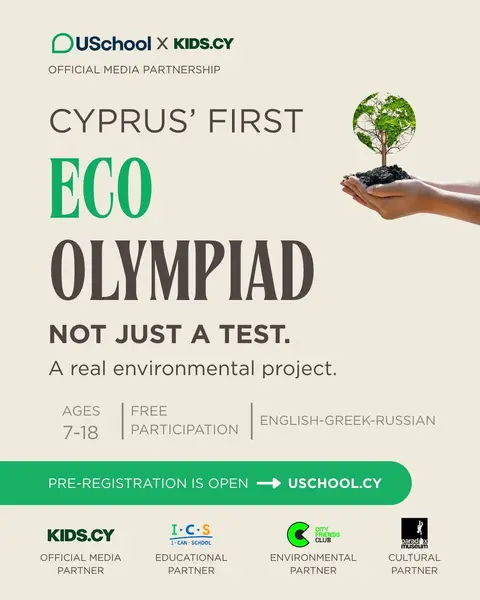
kids.cy Becomes Official Media Partner of Cyprus’ First Eco Olympiad
Children and teenagers aged 7 to 18 are invited to take part in a new environmental initiative that goes beyond traditional academic competitions. Participation is free.
13 November 2026
 Days out and leisure
Christmas Villages in Cyprus 2026–2027
Nine official Christmas Villages open across Cyprus for the 2026–2027 festive season. Expect local food, handmade gifts, workshops and seasonal performances, with different activities in each village.
10 November 2026