
Home → Journal → Activities & Camps
Activities & Camps
Football in Cyprus: Why Everyone Seems to Be Playing the Same Game
Big clubs, more than 10,000 young players and a football system that can start at three years old
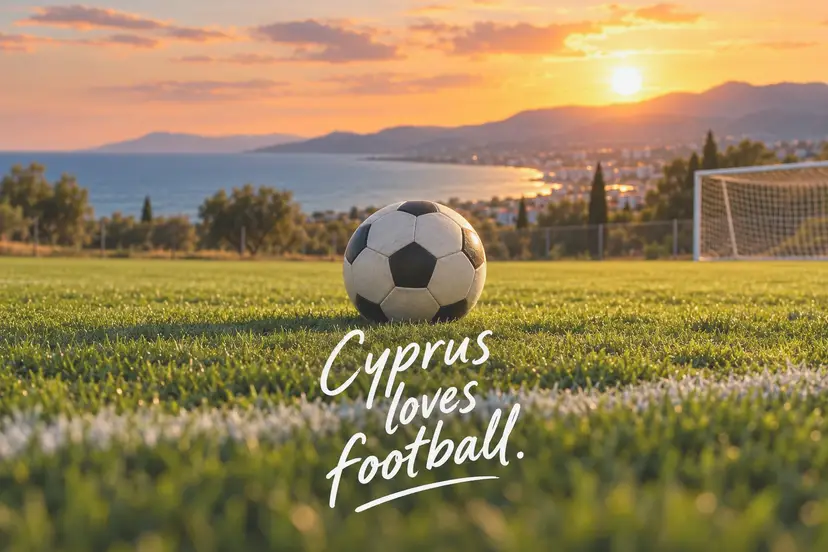
In Cyprus, you may not know the name of the country’s president. But not knowing the football clubs feels almost illegal. APOEL, Omonia, Anorthosis, Apollon, AEL, Aris, AEK, Pafos FC. There. You may now continue living here.
Football really is everywhere. Nicosia has spent decades arguing over APOEL and Omonia, Limassol supports Apollon, AEL and Aris, Larnaca has AEK and Anorthosis, while Pafos FC has become an increasingly prominent name in the west. Adults discuss results, transfers and refereeing decisions with the seriousness normally reserved for constitutional reform. Children often begin their relationship with the game much more simply: one day their parents take them to the nearest football pitch.
The scale of children’s football is impressive too. According to UEFA figures used in the checked source article, in 2023 the Cyprus Football Association grassroots system included 134 academies and 1,047 teams, with more than 10,000 registered children aged 5 to 15.
Why is there so much football in Cyprus?
The climate certainly helps. Children can train outdoors for most of the year, so football does not have to disappear into sports halls for several months every winter. But good weather alone does not explain why the game became so deeply embedded in Cyprus.
Football arrived in Cyprus with the British and quickly became popular in schools and neighbourhoods. Anorthosis was founded in 1911, more clubs followed in different cities, and the Cyprus Football Association was established in 1934. Over more than a century, football became part of the life of Cyprus towns and families. The major clubs developed their own supporters, rivalries and histories, and allegiance to a team often began passing from parents to children. A child joining football today therefore enters a culture that already exists around them, where the game is watched, discussed and, naturally, played.
That tradition is now supported by a huge children’s infrastructure. The Cyprus Football Association brings academies into a common system, organises youth competitions and works with the Ministry of Education on football in schools. Professional clubs run their own academies, independent football schools operate alongside them, and children can start playing in practically every major city from a very young age. Put together a long football tradition, strong club culture, a developed youth system and weather that allows almost year round training, and suddenly those 10,000 children stop looking quite so surprising.
APOEL: almost a century of football history
APOEL was founded in Nicosia in 1926 and became one of the most successful clubs in Cyprus football history. Outside Cyprus, the club is particularly remembered for the 2011/12 season, when it reached the quarter finals of the UEFA Champions League, further than any Cyprus club had previously gone in Europe’s leading club competition.
Youth football is a substantial part of the club structure. APOEL runs its own academy and grassroots programme, with recruitment continuing for the 2026/27 season. Younger children begin with regular training and learning the team game, while older players can progress into competitive age group teams within the club system.
Omonia: the green half of Nicosia
Putting Omonia immediately after APOEL is almost unavoidable. The two clubs have shared the same city for decades, and their rivalry has long been part of Nicosia’s history well beyond football. Supporters can continue debating the green and the yellow-and-blue halves of the capital indefinitely. The children, meanwhile, turn up and kick a ball.
Omonia has a large grassroots youth system and, for the 2026/27 season, recruits children beyond Nicosia as well. Its groups also operate in Limassol, Larnaca and Dali, with separate programmes for girls. Children who later want more competitive football can move through the club’s age group structure, but it all begins in much the same way as anywhere else: a coach, a pitch, several new teammates and a ball that for some mysterious reason refuses to go exactly where you intended.
Aris Limassol: a club growing fast
Aris has existed since 1930, but one of the most interesting parts of its history is happening now. The club has grown rapidly in recent years, and its children’s academy has expanded alongside the first team.
According to Aris figures in the checked source, around 2,000 children now train in the academy with more than 130 certified coaches, across roughly 15 locations in Limassol and Larnaca. Children can begin remarkably early: Aris Junior accepts them from the age of three. Grassroots groups follow, then competitive teams and an age structure continuing through to U19.
A football academy in Cyprus therefore does not necessarily begin with somebody examining a five year old for signs of future professional greatness. On neighbouring pitches you may have three year olds discovering that the ball has ideas of its own, primary school children for whom football is their favourite activity after lessons, and teenagers already playing official competitive matches.
Apollon and AEL: Limassol’s old rivals
If Nicosia football is shaped in large part by APOEL and Omonia, Limassol has its own longstanding rivalry. Apollon and AEL have spent decades sharing the same city, its supporters and a considerable amount of football emotion.
Apollon is one of Cyprus’s most successful clubs, with league titles, Cyprus Cups and extensive experience in European competition. Its first team sits alongside a youth academy, while the older youth sides compete in official Cyprus Football Association competitions. AEL is older still, founded in 1930, and has long been part of Limassol’s sporting history. It too runs a children’s academy with teams across different age groups.
And now Aris has joined this old Limassol pairing as a major force. The result is a rather extraordinary football life for a city of its size: three professional clubs, each with its own supporters and youth structure. Choosing a children’s academy can therefore occasionally come with family diplomacy attached.
Pafos FC: Paphos writes a new football story
Paphos is different. Pafos FC is much younger than the historic clubs of Nicosia and Limassol, having been created in 2014 through the merger of AEP Paphos and AEK Kouklia. Much of its history is therefore being written now rather than retold.
In a relatively short time, the club has developed from a new local project into one of the prominent teams in Cyprus football, with the academy growing alongside it. For the 2026/27 season, Pafos FC lists separate programmes for youth teams, grassroots football and women’s teams. For children in Paphos, the practical result is simple: a large club football structure now exists in their own city.
AEK and Anorthosis: two big football names in Larnaca
Larnaca also has two major football names, although their histories could hardly be more different. AEK Larnaca was formed in 1994 through the merger of two local clubs, EPA Larnaca and Pezoporikos. In its comparatively short history it has become one of the country’s prominent teams and developed its own youth system. In 2026, the academy held trials for U14, U15, U16 and U17 teams.
Anorthosis has a much longer story. Founded in Famagusta in 1911, the club was displaced after the events of 1974 and is now based in Larnaca. Its identity remains inseparable from Famagusta even though its home matches are played in another city. Anorthosis also runs its own academy and youth teams, another example of how closely football, cities and the history of Cyprus are woven together.
Who is the most famous Cypriot footballer?
This is where an argument can begin, but any serious conversation has to include Sotiris Kaiafas. The legendary Omonia striker spent almost his entire career with one club. In the 1975/76 season he scored 39 goals and won the European Golden Shoe as the leading scorer in Europe’s national leagues, an achievement that remains exceptional in Cyprus football.
A later generation has another strong candidate. Michalis Konstantinou played in Cyprus and for major Greek clubs including Panathinaikos and Olympiacos. He scored 32 goals for the Cyprus national team and remains its record goalscorer.
There is, however, a fairly substantial distance between the first training session of a three year old and the football of Kaiafas or Konstantinou. So how does the path actually work?
How children’s football works in Cyprus
The easiest way to understand youth football in Cyprus is as a series of broad levels. The first and largest is grassroots football. Children arrive with very different levels of experience, including plenty who have never trained before. This is the system the CFA substantially reorganised several years ago, bringing many academies and teams across Cyprus into one structure.
For the younger age groups, the aim is deliberately not to reproduce adult league football in miniature. There are no conventional league tables, qualification rounds, finals and prizes. The idea is to get as many children as possible playing, gaining experience and enjoying football before somebody decides that an eight year old urgently needs a points table.
The next level begins when selection and competitive teams appear. Older children play in official CFA championships, while professional clubs have U14, U15, U17, U19 and other age group teams. Training becomes more frequent, the standard of opposition rises and football gradually changes from an after school activity into serious sport.
Only a small proportion continue beyond that. Older youth teams, trials, transfers between academies and eventually a club’s first team belong to another level entirely. But the structure does provide a recognisable route between a child walking onto a pitch for the first time and the youth team of a professional club.
What about academies outside the big clubs?
Children’s football in Cyprus certainly does not end with the professional club academies. Independent and international schools include Mundialito, Masterclass Football Academy, Valencia CF Soccer School, Juventus Academy and others.
There are also academies created or led by former professional players. In Larnaca, Top 11 Academy is associated with Koullis Pavlou, who played for the Cyprus national team. In Nicosia, STRIPES Football Academy Technical Director Koullis Mitsingas also knows professional Cyprus football from the inside, with a career that included the national team as well as APOEL, Omonia, AEL and Apollon.
So families have plenty of options. A child can train at a small school close to home, join an international academy or enter the system of one of Cyprus’s major clubs from the beginning. Sometimes the best football academy is the famous one. Sometimes it is the one you can actually reach on Tuesday afternoon.
Girls play too
And increasingly so. Women’s and girls’ football in Cyprus is still much smaller than the men’s game, but clubs are gradually expanding their programmes. Omonia recruits girls into dedicated groups, APOEL holds trials for young female players, and Pafos FC has several girls’ age group teams.
That matters because the choices available to a girl who wanted to play football in Cyprus were much narrower not very long ago. A similar age pathway to the one long available to boys is gradually taking shape: first training sessions, a team, competitions and the possibility of continuing further.
How young can children start?
Very young. Some academies have programmes from the age of three. Three year old football does not, naturally, bear much resemblance to the match their parents watch on television later that evening. Children get used to the ball, move a lot, develop coordination, follow simple tasks and slowly learn both to listen to a coach and to play alongside other children.
Later, there is more recognisable football: passing, positions, teamwork, matches and competitions. From there, each child and family can decide what they want the game to become, whether that is a favourite activity a couple of times a week or a sport to which they want to give increasingly serious time.
Cyprus plays football
Perhaps the most striking thing about children’s football in Cyprus is not the number of major clubs, or even the 10,000 registered young players. It is how easy it is to become part of the game.
A child can start at three or arrive much later. They can play at a small independent academy near home, wear the shirt of the club the whole family supports, or eventually make a competitive team and see where it leads. Cyprus is small, football pitches are everywhere, the season is long and teams are constantly playing one another. For thousands of children, football simply becomes part of the weekly routine: school, homework, training, a match at the weekend.
And who knows. Somewhere on one of those pitches, the next Sotiris Kaiafas may be running around right now. At the moment, though, he is probably rather more interested in getting the ball.
Information checked by the kids.cy editorial team in August and September 2026. Age groups, training locations, team structures and recruitment change from season to season. Check current information directly with the academy before enrolling a child.
Written by the kids.cy editorial team. Reproduction of our content is permitted only with an active link to kids.cy.
Football
Read next
 Days out and leisure
Christmas Workshops for Kids in Cyprus 2026
Gingerbread houses, handmade decorations, colourful candles and a little creative chaos. This Christmas, children across Cyprus can make their own festive treasures, and parents are welcome to join the fun.
18 November 2026
 News
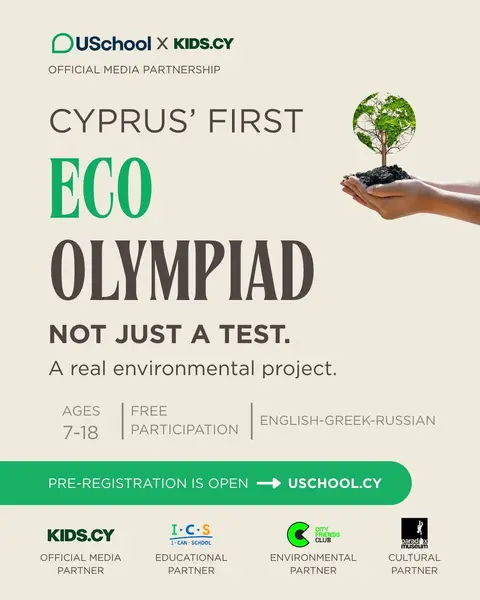
kids.cy Becomes Official Media Partner of Cyprus’ First Eco Olympiad
Children and teenagers aged 7 to 18 are invited to take part in a new environmental initiative that goes beyond traditional academic competitions. Participation is free.
13 November 2026
 Days out and leisure
Christmas Villages in Cyprus 2026–2027
Nine official Christmas Villages open across Cyprus for the 2026–2027 festive season. Expect local food, handmade gifts, workshops and seasonal performances, with different activities in each village.
10 November 2026