
Education
School Qualifications in Cyprus: IGCSE, A Levels, IB, Apolytirion and Where They Can Take You
What exactly are IGCSEs, A Levels, the IB Diploma, Apolytirion and all the other qualifications schools in Cyprus keep mentioning? Here is how the main routes differ, where they can lead, and what actually matters when you are choosing one for your child.
If you have only recently started looking at schools in Cyprus, congratulations: you are about to learn a second alphabet. IGCSE, GCSE, A Levels, IB, AP, SAT, Apolytirion…
Fortunately, it is simpler than the alphabet soup suggests. The useful question is not which qualification sounds most impressive at dinner parties. It is where your child is likely to study next. The UK? Germany or the Netherlands? The US? Cyprus? Greece? Or is the current family plan still somewhere between “we’ll see” and “please don’t ask us yet”?
One more important point: IGCSE, A Levels and the IB are not three competing qualifications at the same level. IGCSE normally comes earlier. After that, students move on to their final school programme.
School → IGCSE → A Levels / IB / another final school programme → university
First things first: IGCSEs are not the final school qualification
IGCSE stands for International General Certificate of Secondary Education. Yes, that is a ridiculous amount of name for one qualification. Humanity wisely reduced it to five letters.
Students usually take IGCSEs at around 14 to 16 years old. In the British education system, this is an important examination stage, but it is not the final qualification used to apply to university.
Students take a fairly broad range of subjects and sit examinations through boards such as Cambridge or Pearson Edexcel. The results can matter for university admission, but on their own they do not replace a final school qualification.
So when a school says, “We offer IGCSEs”, you still do not know what qualification your child will actually leave school with. The useful next question is: “And what do students do after that?”
See all schools offering IGCSE in the catalogue
A Levels: fewer subjects, much more depth
A Levels, short for Advanced Levels, are the classic British school leaving route.
During the final two years of school, students usually concentrate on around three or four subjects.
If a teenager already knows that engineering is the likely direction, for example, they can choose Mathematics, Physics and another relevant subject, and largely stop studying subjects they will not need for university admission.
For one teenager, this is excellent news: “Finally, I can stop studying everything.” For another, it is a fairly brutal question to be asked at 16: “Sorry, am I already supposed to know what I want to do with my life?”
Who it suits: primarily students considering the UK and those who already have a reasonable idea of their future subject. A Levels are also accepted by universities in many European countries, the US and elsewhere, but the requirements of each university should be checked in advance.
It is particularly important to check not only the qualification itself but also the subject combination. A university may require Mathematics plus Physics, for example, as well as specific grades.
See all schools offering A Levels in the catalogue
IB Diploma: six subjects and a very full calendar
IB stands for International Baccalaureate. The full school leaving programme is called the IB Diploma Programme and usually covers the final two years of school.
If A Levels say, “Pick a few subjects and go deep”, the IB says, “Or we could keep six subjects, add a substantial essay, Theory of Knowledge and a pile of projects. We wouldn’t want anyone getting bored.”
IB students take six subjects. There is also a compulsory core: TOK, Theory of Knowledge; EE, the Extended Essay; and CAS, Creativity, Activity, Service.
The main advantage is international flexibility. The IB can work particularly well for families who do not yet know which country their child will apply to. The main drawback is the heavy and very varied workload.
So the argument about whether IB or A Levels are better does not have a universal answer. A more useful question is which programme works better for this particular child and this particular route to university.
See all schools offering the IB Diploma in the catalogue
Apolytirion: the Cypriot qualification international families often discover last
Apolytirion (Απολυτήριο) is the national school leaving certificate of Cyprus.
It is particularly relevant for families considering the local education route and admission to public universities in Cyprus or Greece.
Admission and examination requirements need to be checked for the particular university and applicant category.
Some schools in Cyprus allow students to combine local and international routes, for example Apolytirion alongside IGCSEs and A Levels.
This raises the obvious parental question: “Why does one child need this many qualifications? Should we buy a separate suitcase for the certificates?” The answer is that combining routes can keep several university options open at once.
See all schools offering the Apolytirion in the catalogue
US High School Diploma and AP
Some international schools follow the American system. Students receive a US High School Diploma and may take AP, or Advanced Placement, courses to strengthen their academic profile.
AP adds another two letters to the collection, but the idea is straightforward: advanced subjects at university level for secondary school students. This route is the most natural fit for families considering the US and universities that follow the American admissions model.
See all schools offering the US diploma in the catalogue
French Baccalauréat
The Baccalauréat, or Bac, is the French school leaving qualification. It is a natural option for French speaking families and those considering France, and it can also be used for university applications elsewhere.
At least Bac has only three letters. By this point, that feels almost generous.
See all schools offering the French Baccalauréat in the catalogue
What do Russian schools in Cyprus award?
The important thing is not the language of instruction or the word “Russian” in the school name. What matters is which curriculum the school follows and which official qualification a student receives on graduation.
In schools following the Russian national curriculum, a student may receive the Russian Certificate of Secondary General Education and follow the route connected with Russian final examinations and admission to Russian universities.
If the goal is a European university, check the requirements of the particular country and university in advance. The phrase “the certificate is recognised in Europe” is almost useless on its own. Europe is not one university with one admissions office.
See all schools offering the Russian attestat in the catalogue
And Ukrainian schools?
The same logic applies to Ukrainian schools. A school may follow the Ukrainian state education standard, while some programmes combine it with international components.
For families who expect their child to return to the Ukrainian education system, this route can help preserve continuity. If the plan is to apply to university in another EU country, the same rule applies: look at the future university requirements first, then choose the qualification, not the other way round.
See all schools offering the Ukrainian attestat in the catalogue
So what should you choose?
| Goal | What to look at |
|---|---|
| UK | Most commonly A Levels or IB |
| US | IB, an American programme with AP; A Levels may also work |
| Maximum international flexibility | IB |
| Your child already has a clear subject direction | A Levels may be a particularly logical choice |
| Cyprus / Greece | Explore the local route with Apolytirion and current admission requirements |
| Returning to Russia or Ukraine | It may make sense to preserve the relevant national education system |
| Still no idea | Welcome to the club. Look for a system that keeps several routes open |
Five things that matter more than an impressive qualification name
1. Where your child plans to apply
Not simply “somewhere in Europe”. Ideally, have a shortlist of several countries, because admission requirements can differ significantly.
2. Which subjects they will need
This is particularly important with A Levels. A future engineer, doctor, economist and designer will need different subject combinations.
3. How your child actually learns
IB is broader. A Levels are narrower and deeper. The system needs to suit the teenager as well as the university.
4. The age at which you moved
Changing education systems at nine and changing them a year before final exams are two very different adventures. One of them is considerably more exciting for the parents.
5. What the particular school actually awards
Ask the question literally: “Which official qualification will my child receive after completing Year 13?”
Parent cheat sheet
| What you see on the school website | What it means |
|---|---|
| IGCSE | An examination stage at around 14 to 16. Not the final school qualification. |
| A Levels | British school leaving qualification, usually based on 3 or 4 subjects. |
| IB Diploma | International school leaving programme with 6 subjects plus the compulsory core. |
| Απολυτήριο / Apolytirion | Cyprus national school leaving certificate. |
| US High School Diploma + AP | American secondary school route. |
| Bac / Baccalauréat | French school leaving qualification. |
| Russian school certificate | Russian national education system. |
| Ukrainian school certificate | Ukrainian national education system. |
One last thing: do not choose a school by counting the abbreviations
When a school website says Cambridge IGCSE · A Levels · IB · AP · SAT · IELTS, it looks extremely convincing. Also slightly like the instrument panel of an aeroplane you have just been asked to land.
Fortunately, your family does not need to press every button.
A good education route is not the one that leaves a teenager with the largest collection of letters after their name by 18. It is the one that suits the way they learn and gets them to the universities they want without making the journey unnecessarily complicated.
So when you visit a school, do not begin with “Which qualifications do you offer?” Ask the more useful question: “If my child wants to apply there, which route would you recommend?”
This article is for general information. Requirements of individual universities and the current status of school programmes should be checked before applying.
Questions and answers
What is the difference between IGCSE and A Levels?
IGCSE is an examination stage at around 14 to 16, not the final school qualification. A Levels are the leaving qualification taken in the last two years of school. A child normally sits IGCSEs first and then chooses a leaving programme.
Which is better, IB or A Levels?
There is no universal answer. A Levels give depth in three or four subjects and suit a child who already has some idea of their future field. The IB keeps a broad range of subjects and suits families who do not yet know which country the child will apply to.
What is the Apolytirion, and is it needed if the child is not going to study in Cyprus?
The Apolytirion (Απολυτήριο) is the national school leaving certificate of Cyprus. It matters above all for admission to public universities in Cyprus and Greece. Some schools allow it to be combined with an international route so that several admission options stay open at once.
Is the Russian attestat recognised by European universities?
The phrase “recognised in Europe” means almost nothing on its own: requirements differ from country to country and from university to university. What has to be checked is the rules of the specific university the child intends to apply to.
At what age is it best to move a child to an international school?
The earlier, the gentler the transition. Changing systems at nine and changing systems a year before final exams are fundamentally different stories, and the second one needs a separate conversation with the school.
Which schools in Cyprus offer each system
The catalogue holds 54 private schools in Cyprus, and 38 of them state which qualification they award. Open the private schools catalogue
Written by the kids.cy editorial team. Reproduction of our content is permitted only with an active link to kids.cy.
Private schools
Read next
 Days out and leisure
Christmas Workshops for Kids in Cyprus 2026
Gingerbread houses, handmade decorations, colourful candles and a little creative chaos. This Christmas, children across Cyprus can make their own festive treasures, and parents are welcome to join the fun.
18 November 2026
 News
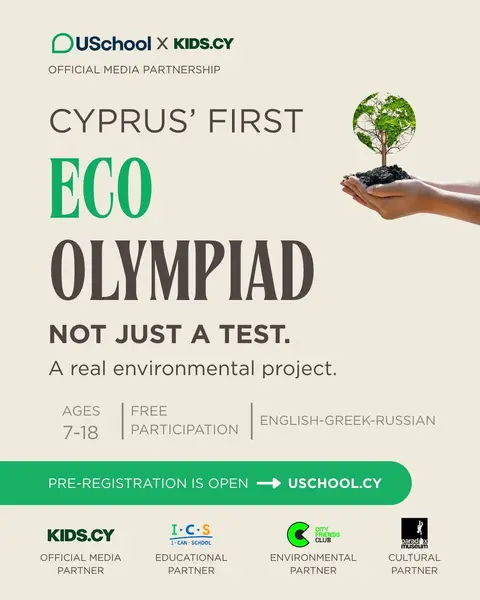
kids.cy Becomes Official Media Partner of Cyprus’ First Eco Olympiad
Children and teenagers aged 7 to 18 are invited to take part in a new environmental initiative that goes beyond traditional academic competitions. Participation is free.
13 November 2026
 Days out and leisure
Christmas Villages in Cyprus 2026–2027
Nine official Christmas Villages open across Cyprus for the 2026–2027 festive season. Expect local food, handmade gifts, workshops and seasonal performances, with different activities in each village.
10 November 2026