
Home → Journal → Children's healthcare
Children's healthcare
A Snake Has Bitten Your Child in Cyprus: What to Do and What Not to Do
The simple first aid rules parents need to know, and the one dangerous snake that makes every unknown bite an emergency
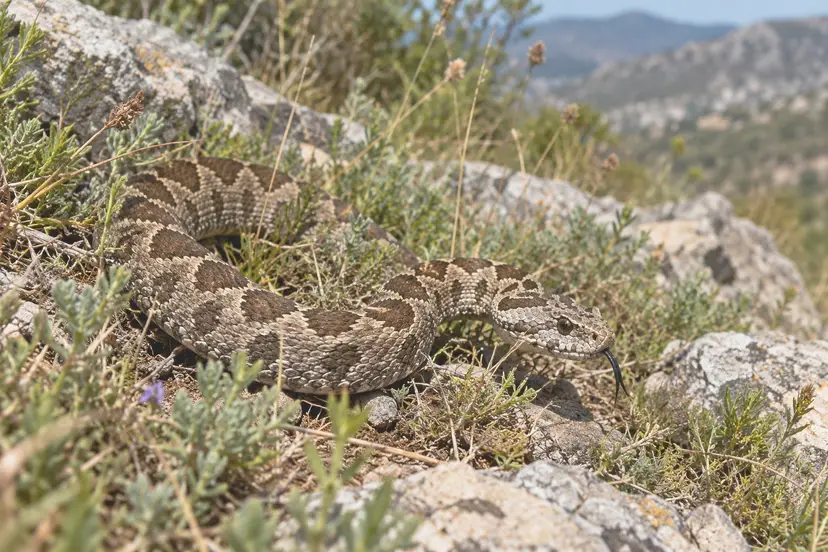
Snakes are a normal part of life in Cyprus. You may see one on a walk, in the mountains, around rocks and bushes, on agricultural land or occasionally in your own garden. Most species are not dangerous to people and, given the choice, would much rather leave than begin any kind of relationship with your family.
Cyprus does, however, have the blunt nosed viper, Macrovipera lebetina. Its bite can be extremely dangerous and potentially life threatening, and a child needs immediate medical attention after a suspected bite. So if a snake bites your child and you do not know with certainty which species it was, this is not the moment to compare photographs online, wait for swelling or conduct a family discussion about whether venom probably entered the body. Call 112.
What to do immediately after a bite
First, move the child to a safe distance from the snake. Do not try to catch it, chase it away with a stick or kill it. If it is leaving, let it leave. Call 112 and say clearly that a child has been bitten by a snake. Give the child’s age, your location and the approximate time of the bite, then follow the dispatcher’s instructions.
Keep the child as still as possible. Sit or lie them down and try to minimise movement of the bitten arm or leg. If you need to reach a car and the child can be carried, carrying them is preferable to making them walk. Remove anything from the affected limb that could become tight if swelling develops, including shoes, socks, watches, bracelets or rings.
And that is essentially where active first aid ends. Do not try to remove venom or treat the bite yourself. The job now is to keep the child moving as little as possible and get medical help as quickly as possible.
What not to do
Do not apply a tourniquet or tightly bandage the arm or leg. Do not cut the bite, try to suck out the venom or use a venom extraction pump. Do not apply ice, burn the wound or experiment with home remedies.
A surprising number of these ideas have spent decades travelling from films and old stories into real emergencies. Modern first aid guidance is much less cinematic: restrict movement, do not waste time on questionable procedures and arrange medical care.
Should you photograph the snake?
Only if taking the photograph requires you to do absolutely nothing else. If the snake is still visible and you can photograph it safely from where you already are, the image may be useful to doctors. Do not move closer for a better picture, follow the snake, try to catch it or, under any circumstances, decide that the hospital would appreciate you bringing it along.
If it has disappeared into the bushes, forget the snake. Your child is now considerably more important.
Which venomous snakes live in Cyprus?
Eight snake species are recorded in Cyprus. Three are venomous, but only one is considered dangerous to humans: the blunt nosed viper, Macrovipera lebetina, known in Greek as φίνα.
It is a large, heavy bodied snake with a broad head, usually grey beige or brownish with a distinct dark geometric pattern along the body. That description is useful when learning about Cyprus wildlife. It is not an invitation to identify the snake yourself after your child has been bitten.
The blunt nosed viper does not hunt people and does not go looking for encounters with them. Like other snakes in Cyprus, it will normally avoid a person if it can. Dangerous situations usually arise when somebody accidentally steps on a snake, gets too close or tries to disturb it.
So if a child simply sees a snake, there is no emergency. Do not approach it, do not touch it and call an adult. That is enough. If the snake bites, the rules change. You no longer need to work out what species it was. Call 112.
What happens after a snake bite?
You cannot tell from the appearance of the bite how much venom entered the body, or whether venom was injected at all. Significant symptoms may not appear immediately, and envenoming can develop more quickly and severely in children than in adults.
There is no safe waiting period after a suspected venomous snake bite. There is no rule giving parents one, two or three hours to see what happens. A child with a suspected venomous bite needs medical assessment as quickly as possible.
Pain at the bite and increasing swelling can be among the early signs. Weakness, nausea, vomiting and other symptoms may also occur. Parents do not need to use those symptoms to judge how serious the bite is. Even if the child seems perfectly well at first, do not wait for symptoms. Call 112.
Why should a child not run after a bite?
The instinct is completely understandable: get to the car and get to hospital as fast as possible. But after a suspected venomous snake bite, the child should not be made to run or walk if that can be avoided. The first aid guidance used for the checked original article recommends restricting the person’s movement as much as possible, particularly movement of the bitten limb. If the child can be carried, carry them.
Do not tightly bandage the limb or apply a tourniquet yourself. Keep the child calm and still, and follow the instructions from the 112 dispatcher.
What to tell 112
Tell the dispatcher that a child has been bitten by a snake. Give the child’s age, the time of the bite and where on the body it occurred. Describe how the child feels and any symptoms that have appeared.
Your location is particularly important. In the countryside, the name of the nearest village may be of limited use if you are several kilometres away along a trail. Coordinates or a dropped map pin can be much more helpful.
Then follow the dispatcher’s instructions. Do not independently decide whether it is better to wait for an ambulance or drive the child to hospital yourself.
What if you did not see the snake?
That can easily happen. A child feels a bite or sudden sharp pain and, seconds later, there is nothing visible in the grass. Do not go looking for the snake.
If the child saw a snake immediately before the bite or there is good reason to suspect a snake bite, call 112, particularly if pain or rapidly increasing swelling develops at the site. The mistake “we went to hospital and it turned out not to be a dangerous snake” is considerably preferable to “we decided to wait at home”.
What happens next?
From this point, the child belongs in the hands of medical professionals. They will assess the child, look for evidence of envenoming and decide what treatment is required.
Not every bite from a venomous snake causes severe poisoning, but there is no reliable way for parents to determine that at home. That is why we are not going to discuss antivenom, blood tests or treatment protocols here. The parents’ job ends where medical treatment begins.
And one more time, because this is the part worth remembering: no immediate symptoms does not mean no danger. If an unknown snake has bitten your child, do not wait to see what happens. Call 112.
Where might children encounter snakes?
Snakes in Cyprus are more active during the warmer part of the year. They can be found around rocks and scrub, dry stone walls, agricultural land, nature trails and other places offering shelter. But a family does not need to embark on a mountain expedition to meet one. Snakes can also appear in gardens and yards, particularly beside undeveloped land or natural areas.
That does not mean you need to inspect every bush before allowing a child outside. Snakes normally try to avoid people. Bites are more likely when somebody accidentally gets too close, steps on a snake or tries to interfere with it.
What to teach a child
There is no need for a long lecture about snake species. One rule is enough:
If you see a snake, do not go near it, do not touch it and do not try to chase it away. Move calmly away and call an adult.
A blunt nosed viper can strike towards a threat in a fraction of a second, over a distance roughly comparable to its own body length. Do not rely on a child being able to jump away in time. That is why snakes should not be examined from close range, poked with sticks or tested to see whether they are alive.
How to reduce the chance of a bite
On walks through long grass, scrub or rocky terrain, closed shoes are a sensible choice. Children should not put their hands under rocks, into gaps between stones or deep into bushes when they cannot see what is there.
A torch is useful at night in the garden or on a nature trail. Around the house, avoid leaving piles of branches, building materials and similar undisturbed hiding places for long periods.
There is no need to turn the garden into a sterile concrete square in a campaign against snakes. They are a normal part of Cyprus wildlife and play an important role in the ecosystem, including helping to control rodents.
What if a snake appears near the house?
Do not try to catch it yourself. And definitely do not delegate the job to the person who once watched a television programme about snakes and has considered themselves qualified ever since.
Keep children and pets away and give the snake a chance to leave. If it remains close to the house and the situation cannot be handled safely, contact someone with appropriate expertise. There is no reason to kill every snake you encounter. Most species in Cyprus are harmless to people.
The most important part
When you see a snake, the rule is simple: do not approach, do not touch and calmly move away.
After a bite, there is no need for heroics either. Do not catch the snake, cut the wound, suck out venom, apply ice or use a tourniquet. Keep the child as still as possible and call 112.
And do not wait for symptoms. There is no safe amount of time to sit at home and see what happens.
Most encounters with snakes in Cyprus end with the person going one way and the snake going the other. But after a bite, one unnecessary trip to hospital is much better than the one occasion when somebody decided it was probably nothing.
Written by the kids.cy editorial team. Reproduction of our content is permitted only with an active link to kids.cy.
Paediatricians
Read next
 Days out and leisure
Christmas Workshops for Kids in Cyprus 2026
Gingerbread houses, handmade decorations, colourful candles and a little creative chaos. This Christmas, children across Cyprus can make their own festive treasures, and parents are welcome to join the fun.
18 November 2026
 News
kids.cy Becomes Official Media Partner of Cyprus’ First Eco Olympiad
Children and teenagers aged 7 to 18 are invited to take part in a new environmental initiative that goes beyond traditional academic competitions. Participation is free.
13 November 2026
 Days out and leisure
Christmas Villages in Cyprus 2026–2027
Nine official Christmas Villages open across Cyprus for the 2026–2027 festive season. Expect local food, handmade gifts, workshops and seasonal performances, with different activities in each village.
10 November 2026