
Home → Journal → Things to do with kids
Things to do with kids
Where to See Turtles in Cyprus, and How to Do It Properly
Nesting beaches, snorkelling spots and the rather important art of seeing a wild animal without becoming the most annoying part of its day
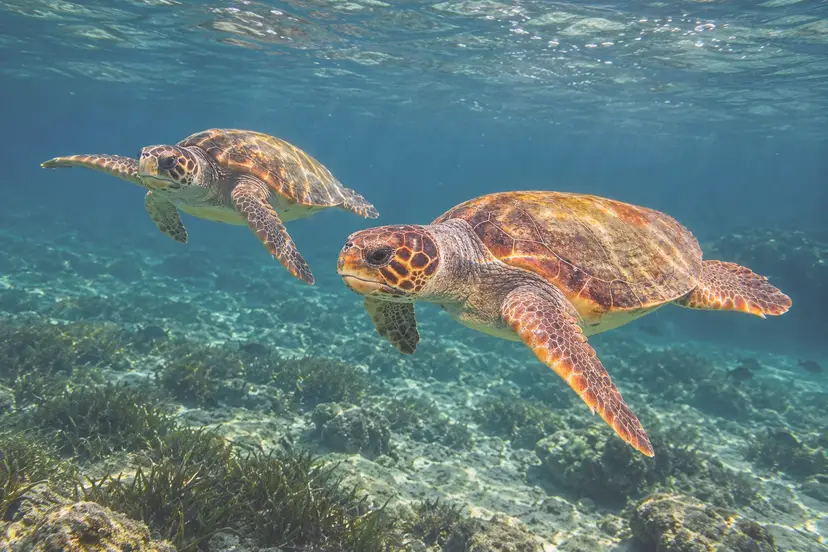
Every summer, something happens on Cyprus beaches that in some countries would require a special excursion and a considerable amount of advance booking. Sea turtles come ashore at night to lay their eggs and return to the water. Several weeks later, tiny hatchlings emerge from the sand and make their way towards the sea. In Cyprus, all of this happens remarkably close to ordinary beaches, resorts and towns.
Actually seeing it happen is much harder than tourist photographs may suggest. Most important nesting beaches are protected, night access is restricted and there are no organised tours taking visitors to nesting females or hatching nests. What families can do is visit during the day, see protected nests and tracks in the sand, and in some places have a chance of meeting a turtle while snorkelling.
So where should you look, when does turtle season begin, and how can you turn it into a day out with children without disturbing the animals who are, after all, the reason for the trip?
Which turtles live around Cyprus?
Two species of sea turtle nest in Cyprus: the loggerhead turtle, Caretta caretta, and the green turtle, Chelonia mydas. Both are protected, and their breeding areas are covered by Cyprus and European conservation law.
Loggerheads are the more common nesting turtle in Cyprus. They have reddish brown shells and large, powerful heads with strong jaws, useful for a diet that includes crabs, molluscs and other animals with hard shells. Green turtles are larger, with adults capable of reaching a shell length of more than a metre. They feed mainly on marine vegetation, which is why swimmers and snorkellers sometimes encounter them around shallow seagrass areas.
A nest commonly contains around a hundred eggs, although the number varies by species and individual female. Only a very small proportion of hatchlings survive to adulthood, and years later females return to breed in the same broad region where they themselves hatched.
That gives an ordinary summer beach a rather different perspective. The place where your family has arrived with towels, water bottles and three arguments about who is carrying the bag may also be part of a breeding cycle that turtles have been repeating for generations. This is why an otherwise completely normal stretch of sand can suddenly contain barriers, protective cages and signs asking people to stay away from a nest.
When is turtle season?
The first nests in Cyprus appear in May. In 2025, the Department of Fisheries and Marine Research reported the first nests on 16 May on beaches around Polis Chrysochous, and nesting then continued through the summer.
Females come ashore at night, choose a place above the waterline, dig a nest in the sand, lay their eggs, cover them and return to the sea. The whole process happens without human assistance, which is precisely how conservation teams want it to remain.
Several weeks later comes the next stage. Hatchlings emerge mainly at night and make their own way towards the water. Light from torches, phones, cars and nearby buildings can send them in the wrong direction, so darkness on a nesting beach is not simply part of the romantic atmosphere. It is part of how the hatchlings survive.
Turtle season therefore stretches from spring into autumn. New nests appear in early summer, while hatching becomes more common later in summer and into autumn. It is not a good idea to visit protected beaches at night hoping to see a female or a group of hatchlings. Night access to the main nesting beaches is restricted specifically so that the turtles can get on with the important business without an audience.
Lara and Toxeftra: Cyprus’s best known turtle beaches
The most famous nesting area is around the Akamas Peninsula. The protected Lara and Toxeftra area has existed since 1989 and forms part of the European Natura 2000 network. It contains important nesting habitat for both loggerhead and green turtles.
The Department of Fisheries and Marine Research monitors nesting, marks identified nests and places protective cages over some of them. The cages are mainly there to protect eggs and hatchlings from foxes. So the little metal structures in photographs of Lara are not a visitor attraction thoughtfully installed for better holiday pictures. They are part of a turtle conservation programme.
Getting there takes a little more effort than reaching an ordinary beach. Beyond the Agios Georgios area, the familiar surfaced road gives way to dirt roads. Conditions around Akamas change, and many car rental companies do not allow ordinary rental vehicles on unpaved roads, so check the rental conditions before setting off. The area can also be approached from the Latchi side, while boat trips provide another way to see the Akamas coastline.
From the beginning of June until the end of September, particularly strict rules apply on protected nesting beaches. Umbrellas, sunbeds, tents and other temporary structures are prohibited, and people may not remain on the beach from one hour before sunset until one hour after sunrise. Vehicles on the sand, fires, littering and activities that damage wildlife habitat are prohibited throughout the year.
A family trip to Lara therefore looks rather different from the turtle encounter some visitors imagine. During the day you will probably not see an adult turtle and you are extremely unlikely to witness hatchlings emerging. What you can see is the beach, the protected nests and the way one of Cyprus’s most important sea turtle conservation programmes works.
And this is one of those unusual occasions when arriving at a turtle beach and seeing no turtles is a sign that things are going rather well.
Polis, Gialia and Chrysochou Bay
Another important nesting area lies close to Polis. Nesting beaches extend along Chrysochou Bay, including areas around Argaka, Limni and Gialia. Loggerheads and green turtles both nest here, and parts of the coastline also fall within Natura 2000 protected areas.
For a day out with children, this area is considerably easier than Lara. There is no long drive along Akamas dirt roads, Polis and other settlements are nearby, and there are ordinary beaches that are easy to reach by car. During summer you may still see marked and protected nests, and in the morning broad tracks sometimes remain in the sand where a female came ashore during the night.
Just remember that a fenced nest is not an invitation to walk over and inspect it from six inches away. The markings and protective structures identify the bit of beach you should avoid. For a child, seeing them is already enough to understand that turtles in Cyprus are not somewhere inside a BBC documentary on a distant nature reserve. They are nesting on the same coastline where families come to swim.
Nests also appear far beyond the two main protected areas. They have been recorded at Lady’s Mile near Akrotiri and on other stretches of Cyprus coastline. A turtle chooses a nesting site for reasons of her own and is under no obligation to consult the Natura 2000 map first. So one summer, a protected nest may appear on a beach your family has known for years.
Why are there no night turtle tours?
The question is understandable. If turtles come ashore to nest at night, why not organise a small tour, walk quietly onto the beach and watch?
Because people, light and movement can cause a nesting female to abandon the attempt and return to the sea. That is why night access is restricted on the main nesting beaches and monitoring is left to specialists working on turtle conservation.
The same applies to hatching. Young turtles orient themselves partly using the light over the sea horizon, so artificial light can send them in completely the wrong direction. A torch, camera flash or bright phone screen may feel harmless to a person and be a serious problem to an animal that emerged from the sand approximately thirty seconds ago and is already having quite a demanding evening.
There is therefore no guaranteed turtle show. You can visit Lara or the Polis area, see nests and tracks and learn how conservation works, but seeing the animal itself remains a matter of luck. Fortunately, there is another, much more natural place to look for turtles: not where they reproduce, but where they spend an ordinary day.
Turtles in the water: where to go snorkelling
One of the best known places is at the other end of Cyprus. Green Bay near Protaras is a sheltered bay with easy water access and areas of seagrass. Green turtles come here to feed, so divers and snorkellers encounter them regularly.
There is no guarantee, of course. The turtle does not live beside a particular buoy and report for work at the beginning of the tourist day. But Green Bay is genuinely one of the places in Cyprus where the chances of seeing a turtle in its natural environment are relatively good.
Another well known spot is nearby Konnos Bay, between Protaras and Ayia Napa. Turtles are also encountered around Cape Greco, Akamas and Latchi and in other areas with suitable feeding habitat. Sometimes they can be seen directly from a boat or close to shore.
Morning is often the easiest time for snorkelling. The sea tends to be calmer, visibility can be better and there is usually less boat traffic. If a child is a confident snorkeller, exploring the seagrass can be an adventure in itself even if nobody with a shell turns up this time.
If a turtle does appear, stop and let the animal decide how close it wants to come. Do not chase it for a photograph, touch it, feed it or try to swim alongside it. Most importantly, do not position yourself between the turtle and the surface because sea turtles need to come up regularly to breathe.
There is a rather pleasant rule here: the less effort you make to persuade a turtle to behave correctly for the family photograph, the better the encounter usually becomes.
How to watch turtles without disturbing them
Most of the rules come down to one simple idea. If a turtle has to change its behaviour because of you, you are too close or doing something wrong. That applies to adults in the water, nesting females on the beach and newly hatched turtles making their way to the sea.
On nesting beaches, darkness and clear sand are particularly important. Torches, camera flashes, phone screens and car headlights can disorient hatchlings. Deep holes left after children have been digging can become obstacles, as can sunbeds, umbrellas and other things left on the sand.
Do not move or open protective cages, signs or markers around nests, even if somebody in the family has examined the structure for nine seconds and developed strong opinions about how it should have been installed. Cars and quad bikes do not belong on the sand either, and all rubbish should leave the beach with you.
The rules in the water are similar. Do not touch, feed or pursue a turtle that wants to leave. Stop and watch instead. If it is rising towards the surface, leave a clear route because it needs to breathe.
Going with children
The most important thing is not to promise: “Today we are definitely going to see a turtle.” It is a wild animal, not an item on the programme beginning at 10:30.
If the aim is to see a live turtle, an early snorkelling trip to Green Bay or Konnos Bay is one option for children who are already confident in the water and comfortable using a mask. If no turtle appears, there is still the sea, the fish and the underwater exploration.
A completely different option is the coast near Polis. In the morning you may find the track of a female that came ashore during the night to lay eggs. The trail is distinctive: a broad track leads from the water up the beach and then back towards the sea. Looking for tracks with a child can be every bit as interesting as searching underwater for a turtle. Just do not walk along the track itself or start trying to locate the nest.
Lara can become a small adventure in its own right. The journey through Akamas, the wild coastline and protected turtle nests feel very different from an ordinary Cyprus beach day. Lara lies within Akamas National Forest Park, while the Lara and Toxeftra coastline has additional protection because of its turtle nesting sites. There are no rows of sunbeds and umbrellas, cafés or water sports. That is exactly how the place is supposed to be.
You do not need any special equipment for the visit. Water, a hat and suitable shoes are enough. The rule for children can be even simpler: look as much as you like, but do not touch anything.
Can families help?
Cyprus has a programme called Cyprus Chelona, run by Terra Cypria together with the Department of Fisheries and Marine Research. Volunteers help monitor nesting beaches in Akamas, Chrysochou Bay and the Lady’s Mile area, collect data and observe nests.
This is real fieldwork rather than an opportunity to spend several romantic nights hanging out with turtles. Monitoring involves early starts, long beach surveys, heat and careful data collection. The programme is primarily for people prepared to do that work, and recruitment and conditions can change from season to season, so current information is best checked directly with Terra Cypria.
Becoming a volunteer is not necessary to help. The useful things are much less glamorous: take rubbish away, fill in holes after playing in the sand, avoid lighting nesting beaches at night and leave turtles in the water alone. From the turtle’s point of view, the result is every bit as good.
What if you actually meet one?
If you unexpectedly see a female on the beach at night, move away, switch off any lights and do not approach for a photograph. A disturbed turtle may abandon her nesting attempt and return to the sea.
If hatchlings are emerging from the sand, do not pick them up and carry them to the water. Remove artificial light and other obstacles and allow them to reach the sea themselves. If something looks wrong or the animals are clearly in danger, contact the Department of Fisheries and Marine Research.
The same applies to an injured, entangled or stranded turtle. Do not try to drag a large animal back into the sea or transport it yourself. Note the exact location and contact specialists at the Department of Fisheries and Marine Research.
If you discover what looks like a new nest or fresh tracks in an unmarked area, do not dig into the sand or build your own protective barrier. It is also better not to publish the precise coordinates on social media. Pass the location to the specialists so they can inspect the site and decide whether the nest needs protection.
Turtles remain wild animals
The possibility of meeting a sea turtle a few metres from an ordinary Cyprus beach quickly begins to feel almost normal. Perhaps that is one of the loveliest things about living here. Sometimes seeing a rare wild animal requires nothing more elaborate than putting on a mask in the morning and swimming out from shore.
But you may see nothing. At Lara, there may be only protective cages over nests. Near Polis, perhaps only a track in the sand. At Green Bay, you might snorkel for an hour and meet an impressive collection of fish but no turtle whatsoever. That does not make the trip a failure.
Turtles in Cyprus are not a tourist attraction and they do not owe anyone an appearance on schedule. They really do live here, feed along the coast, return to the beaches each summer and leave new nests in the sand. Years later, some of the hatchlings born here will return to Cyprus themselves.
Which seems like a very good reason to leave them the chance to do it.
Information checked by the kids.cy editorial team in September 2026. Protected area rules and volunteer programme conditions can change, so check current information from the Department of Fisheries and Marine Research before travelling.
Written by the kids.cy editorial team. Reproduction of our content is permitted only with an active link to kids.cy.
Nature & Day Trips
Read next
 Days out and leisure
Christmas Workshops for Kids in Cyprus 2026
Gingerbread houses, handmade decorations, colourful candles and a little creative chaos. This Christmas, children across Cyprus can make their own festive treasures, and parents are welcome to join the fun.
18 November 2026
 News
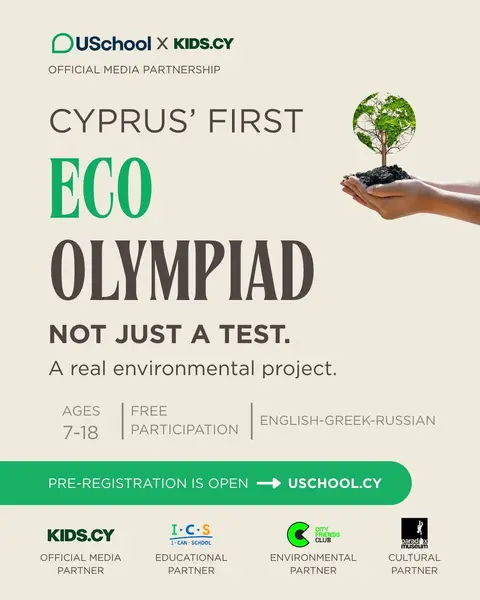
kids.cy Becomes Official Media Partner of Cyprus’ First Eco Olympiad
Children and teenagers aged 7 to 18 are invited to take part in a new environmental initiative that goes beyond traditional academic competitions. Participation is free.
13 November 2026
 Days out and leisure
Christmas Villages in Cyprus 2026–2027
Nine official Christmas Villages open across Cyprus for the 2026–2027 festive season. Expect local food, handmade gifts, workshops and seasonal performances, with different activities in each village.
10 November 2026